
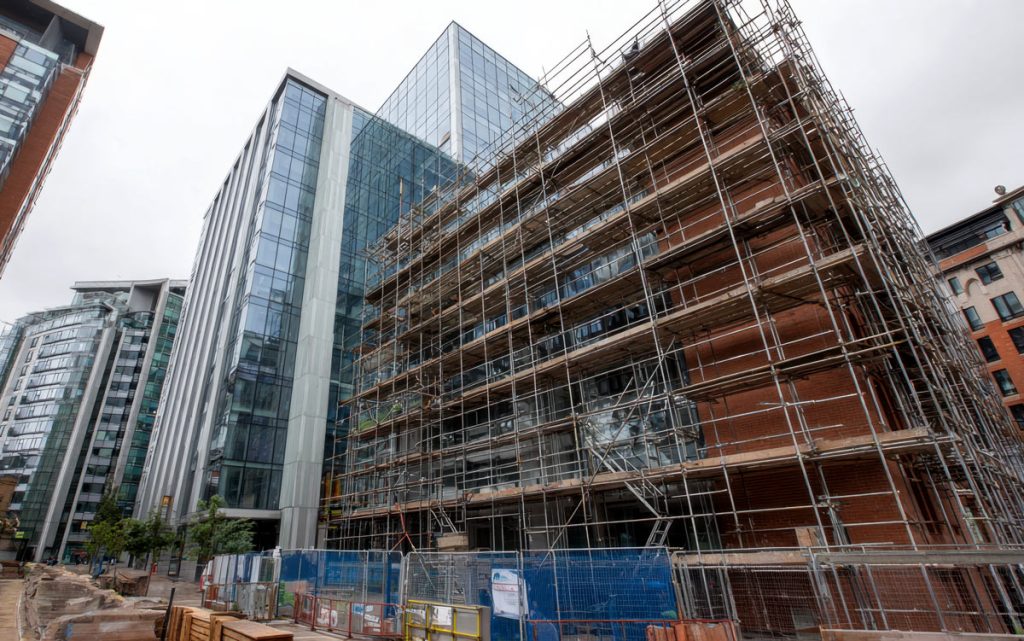
If you’re planning building work — whether it’s a roof repair, extension, or full refurbishment — scaffolding will likely be part of the setup. One question that tends to come up quite quickly is: how long can it actually stay there?
It sounds straightforward, but the answer isn’t fixed. In practice, the length of time scaffolding can remain on your property depends on several factors — legal, practical, and sometimes just down to how the project unfolds.
This guide breaks it down in plain terms, so you know what to expect and where potential issues might arise.
Is There a Legal Time Limit for Scaffolding?
On private property, there’s no strict UK law that sets a maximum time limit for scaffolding to remain in place. In theory, it can stay up for as long as it’s needed for the work.
However, that doesn’t mean it can simply be left indefinitely without consideration.
A few key conditions still apply:
- The scaffolding must remain safe and structurally sound
- It should be used for its intended purpose
- Regular inspections must be carried out
So while there’s no hard deadline, there is an ongoing responsibility to maintain safety standards throughout its lifespan.
What If Scaffolding Is on a Public Road or Pavement?
This is where things become more regulated.
If any part of the scaffolding extends onto a public highway or pavement, a licence from the local council is required. These licences are usually granted for a fixed period — often between 2 to 4 weeks to begin with.
After that, extensions can be applied for if the project is still ongoing.
Local authorities may impose conditions such as:
- Safety lighting for pedestrians and traffic
- Protective barriers or hoarding
- Specific working hours
If the scaffolding remains in place beyond the approved period without renewal, fines or enforcement action can follow. So in these cases, timing becomes more tightly controlled.
Typical Timeframes for Common Projects
While every job is different, there are some rough guidelines based on typical construction work.
Short-Term Projects (1–2 weeks)
- Minor roof repairs
- Gutter replacement
- Small maintenance tasks
Medium-Term Projects (3–6 weeks)
- Re-roofing
- Chimney work
- Rendering or external painting
Longer Projects (6+ weeks)
- Extensions
- Loft conversions
- Full property refurbishments
In reality, timelines can shift. Weather delays, material shortages, or changes to the scope of work often extend the duration.
It’s not unusual for scaffolding to stay up longer than originally planned — though ideally this is managed with clear communication.
Factors That Affect How Long Scaffolding Stays Up
1. The Scope of Work
Larger or more complex projects naturally require longer access. A full renovation will take significantly more time than a straightforward repair.
2. Weather Conditions
In the UK, weather is often an unpredictable factor. High winds, heavy rain, or freezing conditions can delay work, leaving scaffolding in place for longer than expected.
3. Project Delays
Delays aren’t always avoidable. Trades may be scheduled back-to-back, and if one stage overruns, everything shifts.
4. Access Requirements
Sometimes scaffolding remains up even after the main work is complete, simply because follow-up tasks are planned — such as inspections, snagging, or finishing touches.
5. Council Licensing (If Applicable)
As mentioned earlier, if a licence is required, its duration will influence how long scaffolding can legally remain in place — unless extended.
Can Scaffolding Be Left Up Too Long?
Technically, yes — especially if it’s not being maintained or used properly.
Leaving scaffolding in place longer than necessary can create a few issues:
- Increased risk of wear and tear
- Potential safety concerns if not inspected regularly
- Inconvenience for homeowners or neighbours
- Possible security concerns (scaffolding can provide access to upper floors)
That said, a well-maintained scaffold that is regularly checked can remain safe for extended periods.
The key point is that “longer” isn’t the problem in itself — neglect is.
Inspection Requirements Over Time
UK safety standards require scaffolding to be inspected:
- Before first use
- Every 7 days thereafter
- After any significant alteration
- Following extreme weather conditions
These inspections ensure the structure remains safe, regardless of how long it’s been in place.
Experienced scaffolding companies tend to manage this as part of their service, rather than leaving it to chance.
What Happens If Work Finishes Early?
If the project is completed ahead of schedule, scaffolding should ideally be removed as soon as it’s no longer needed.
In practice, removal may take a few extra days depending on:
- Availability of the scaffolding team
- Other scheduled jobs
- Access to the site
Most reputable companies aim to keep this delay minimal, but it’s worth clarifying timelines in advance to avoid frustration.
Can You Request Early Removal?
Yes — if the scaffolding is no longer required, you can usually request removal.
However, there are a couple of considerations:
- The scaffolding company may need notice to schedule dismantling
- There may be minimum hire periods included in the contract
- Removal must be carried out safely, not rushed
It’s generally best to discuss expected timelines upfront, rather than treating removal as an afterthought.
Impact on Neighbours and Surroundings
Scaffolding doesn’t just affect the property it’s attached to. In residential areas, neighbours often notice it — especially if it remains in place for several weeks.
Common concerns include:
- Obstruction of light
- Noise during installation and removal
- Privacy issues
- Visual impact
If scaffolding encroaches on neighbouring property or shared access, additional permissions may be required.
Clear communication tends to reduce friction, particularly on longer projects.
Security Considerations
One aspect that’s sometimes overlooked is security.
Scaffolding can make it easier to access upper windows or roofs, particularly if it remains in place overnight or for extended periods.
To reduce risk:
- Access ladders can be removed or secured when not in use
- Alarm systems or CCTV may be considered
- Windows and doors should be properly locked
Experienced scaffolders often take basic precautions, but homeowners may want to remain aware of the added access points.
Choosing a Scaffolding Company That Manages Timelines Well
The duration of scaffolding on your property often comes down to how well the project is managed.
A reliable scaffolding company will usually:
- Provide realistic time estimates
- Coordinate with other trades
- Carry out regular inspections
- Communicate clearly about delays or extensions
It’s not about promising the shortest timeframe — that can sometimes be unrealistic. It’s more about managing expectations and adapting when things change.
Final Thoughts
So, how long can scaffolding stay up on your property?
In simple terms: as long as it’s needed — and as long as it remains safe, compliant, and properly managed.
There isn’t a fixed time limit for private property, but there are practical and legal considerations that shape the timeline. Public access areas introduce stricter controls, while project scope and external factors often influence how things unfold.
If anything, the duration of scaffolding tends to reflect the nature of the project itself. Short jobs come and go quickly; larger ones take time.
The key is working with a scaffolding team that understands both the technical side and the practical realities — keeping things safe, organised, and moving in the right direction.